What are the key KPIs to improve the efficiency of your end of line?
In today’s industry, the end of line has evolved from being a simple closing process into a strategic factor for competitiveness, as it directly impacts productivity, costs, and plant sustainability. There are different key performance indicators (KPIs) that allow us to assess whether our packaging systems are operating at full performance.
In this article, we will analyze these KPIs and how optimizing them increases the efficiency of your end of line.
OEE as the foundation of operational performance
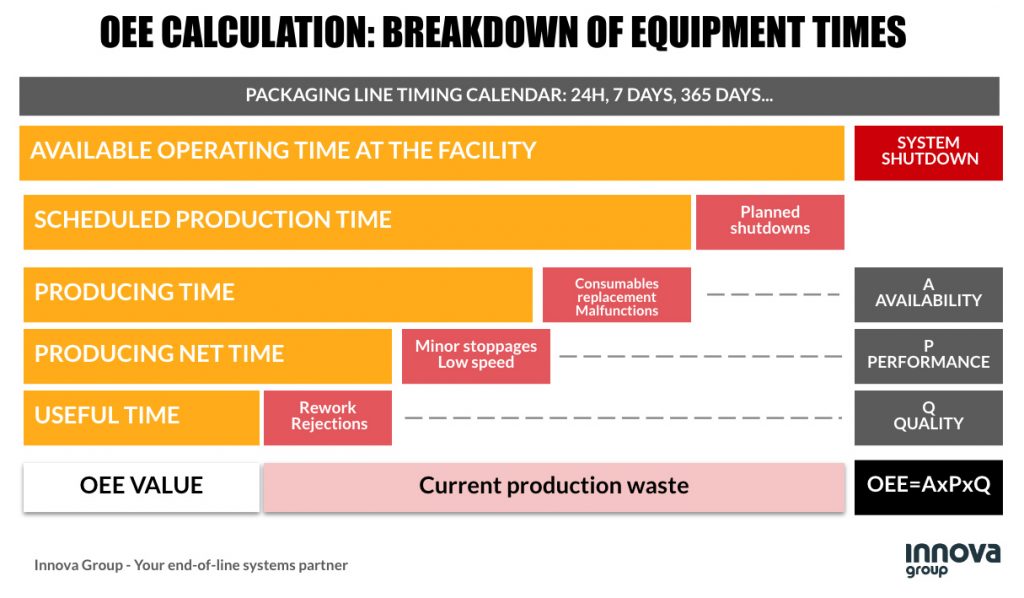
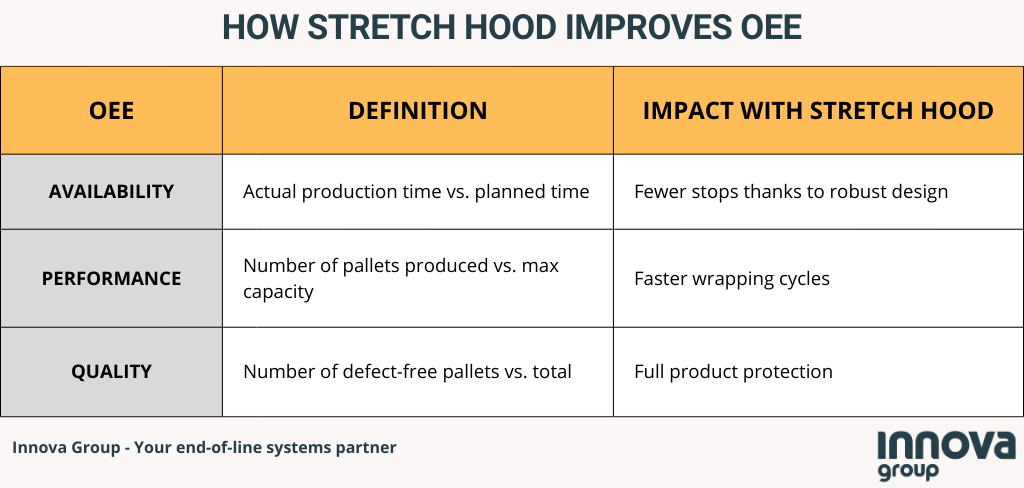
One of the main KPIs for measuring the performance of a production line is OEE (Overall Equipment Effectiveness), as it combines three key factors: availability, performance, and quality.
How is OEE calculated?
- Availability: Measures line downtime. It is calculated by dividing the time the machine has been running by the time it should have been operational.
- Performance: Measures speed. It compares actual production output against the theoretical maximum capacity of the equipment. If a system runs slower than its rated capacity, performance decreases.
- Quality: Measures good output. It divides the number of defect-free wrapped or hooded pallets by the total number of pallets produced.
What is the optimal benchmark?
The total effectiveness of the machine, including losses, is obtained by multiplying availability, performance, and quality. The final result is expressed as a percentage between 0 and 100%. A theoretical 100% would be the optimal result: production with no downtime, maximum speed, and zero defects.
- 70%: Minimum acceptable level. Below this, financial losses due to downtime and defects become critical.
- 85%: World-class standard. Achieving this level is a major milestone for many companies, with minimal downtime and near-perfect quality.
Keys to improving efficiency and OEE
When OEE shows room for improvement, there are corrective actions that directly impact line profitability. Based on our experience as manufacturers, these are the main guidelines:
- Automation and upgrades: Replacing obsolete equipment with automatic systems reduces frequent breakdowns and speeds up slow manual processes, achieving fast ROI.
- Preventive and technical maintenance: Planning maintenance during scheduled downtime avoids unexpected interruptions.
- Technical training: Continuous training for technical staff ensures faster resolution of common issues and better equipment handling.
- Operational continuity: Keeping machines running consistently, avoiding prolonged downtime, promotes better mechanical performance and facilitates cleaning and maintenance tasks.
But… is OEE the only way to measure end-of-line performance?
Although OEE is the best tool to measure production line performance, it works as a result indicator, but not always as a cause indicator—it does not identify exactly where the issue lies. That is why it is important to complement OEE with specific KPIs.
These are other key indicators that allow you to specifically evaluate and improve the performance of an end-of-line packaging solution.
1. Packaging consumables cost
Material consumption is one of the most relevant KPIs in any packaging line, as it directly impacts operating costs. Consumables should not be measured by purchase price, but by film or strap consumption per pallet.
An efficient line is not the one that uses the cheapest material, but the one that ensures maximum load security and full protection without using more material than necessary. Depending on the system used, technical optimization offers specific solutions to reduce this KPI:
- Automatic wrappers: Electronic wrapping technology with torque control and 400% film pre-stretch system.
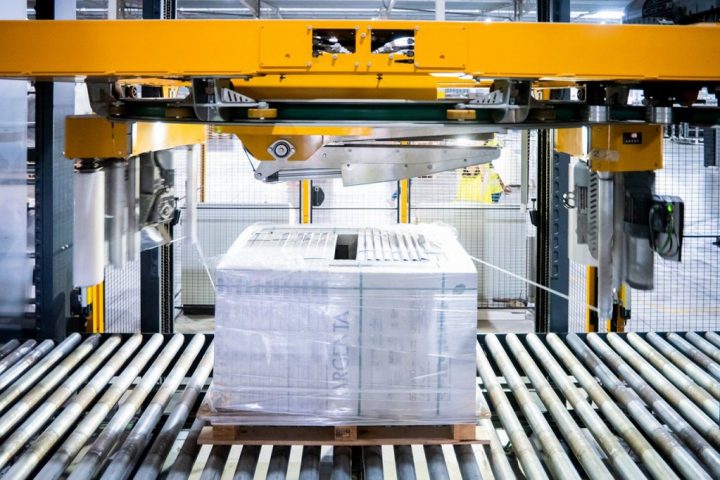
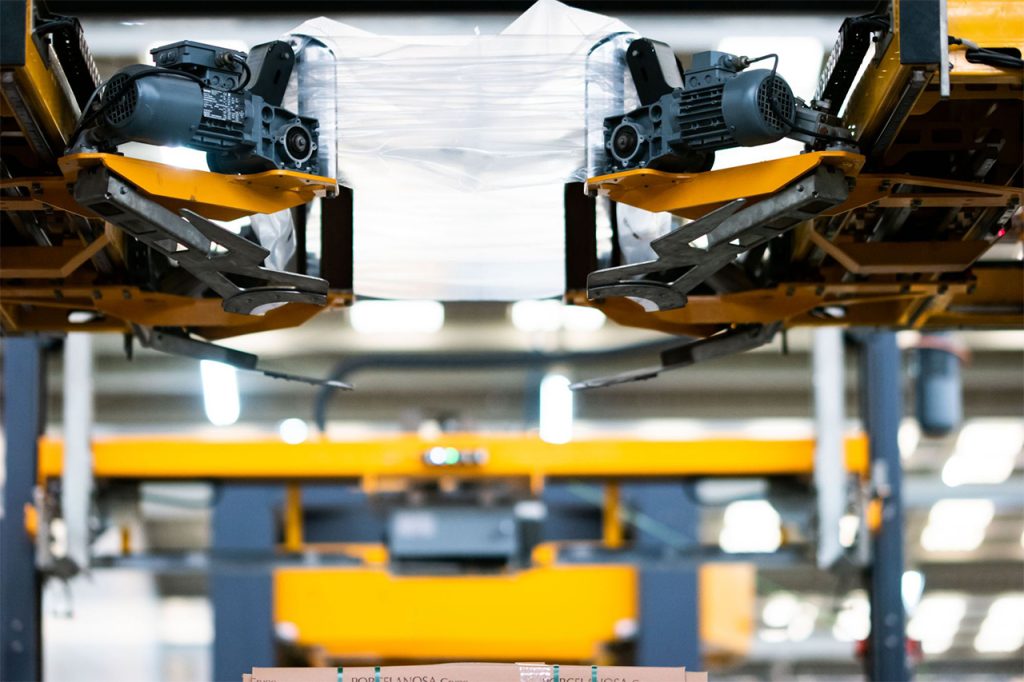
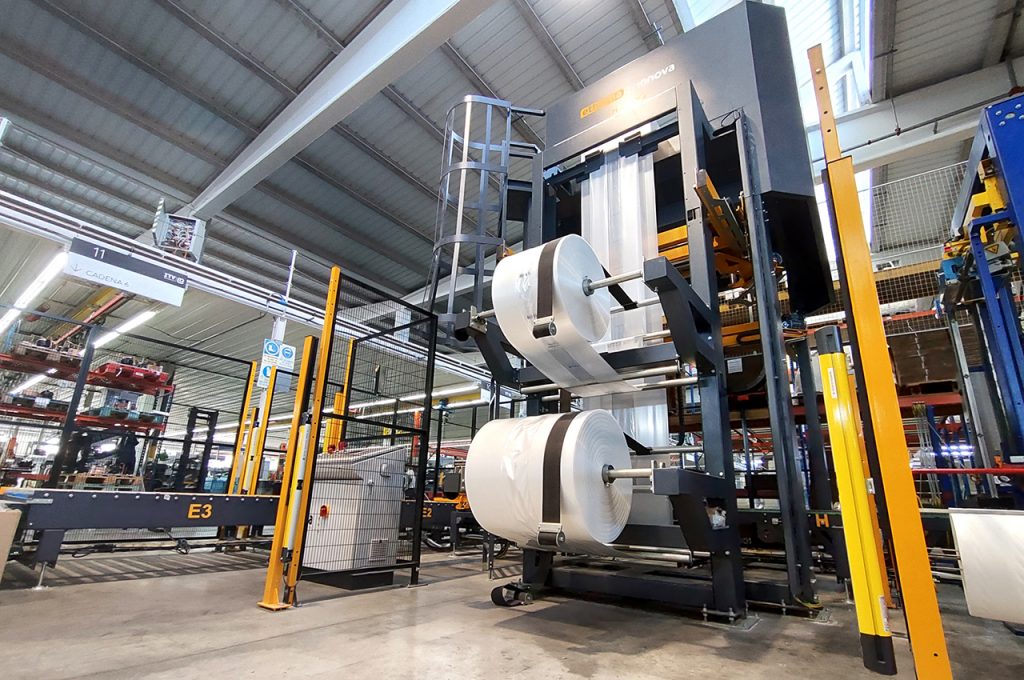
- Stretch Hood system: Uses a single tubular film that fully adapts to the load, eliminating excess plastic and providing total protection.
- Automatic strapping: Maximum stability by applying the exact strapping tension, avoiding breakage and material waste.
Optimizing this indicator can reduce costs by up to 50% in high-production plants, turning an operating expense into an immediate competitive advantage.
2. Load protection and safety
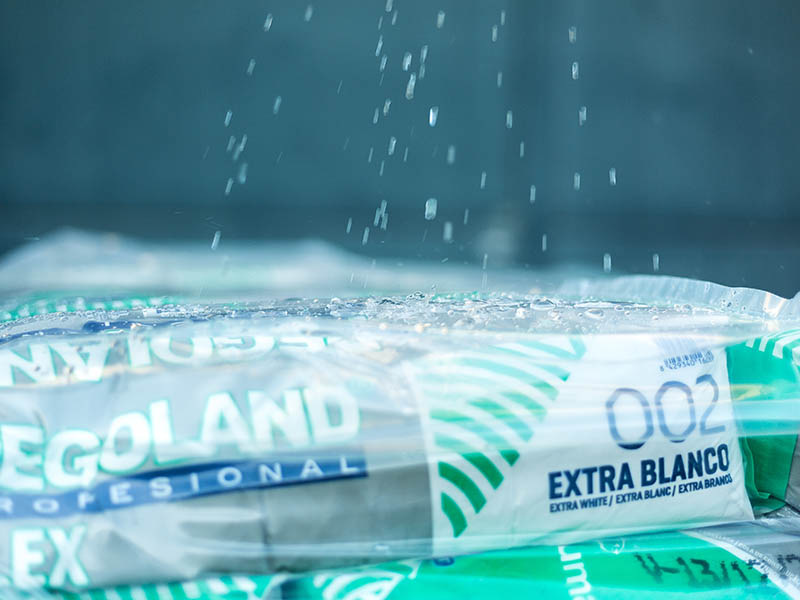
Another key indicator is the level of incidents during transport and storage related to load protection and stability. Every damaged pallet results in additional costs due to returns, product damage, and negative impact on the company’s reputation. This KPI is measured by tracking damages, claims, or returns in relation to the total number of delivered pallets.
How can you achieve a positive result? With next-generation packaging solutions such as Stretch Hood, which provides total load protection, or automatic strapping systems, which compact and secure the load to ensure full stability.
3. Carbon footprint calculation and energy efficiency
Sustainability has become a strategic KPI for any company. At the end of line, this indicator focuses on reducing emissions through optimized energy consumption and smart material management.
With Stretch Hood, sustainability becomes a tangible KPI, as it is one of the most environmentally friendly systems, reducing plastic usage, allowing the use of recycled-content films, and operating with high-efficiency motors and components.
How to measure it in practice:
- Energy consumption per pallet: Record energy consumption (kWh) divided by the number of hooded pallets.
- Film consumption per pallet: Track material usage in grams per pallet.
- Use of sustainable consumables: Percentage of recyclable or recycled consumables used over total consumption.
- Avoided emissions: Calculate CO₂ emission reductions achieved with Stretch Hood compared to heat-based solutions, such as shrink systems.
4. ROI improvement at the end of line
Finally, return on investment (ROI) is the KPI that reflects the financial success of all improvements implemented in the line. It is essential for evaluating the economic return of a new packaging system.
How to measure this KPI in practice:
% ROI = (net savings / initial investment) × 100
In reality, it can be considered a global indicator, as it reflects the economic outcome of all the KPIs analyzed: savings in film consumption, reduction of logistics incidents, lower energy consumption, increased productivity, and improved OEE. Each of these partial improvements generates an economic impact that, when combined, results in a faster and measurable return on investment.
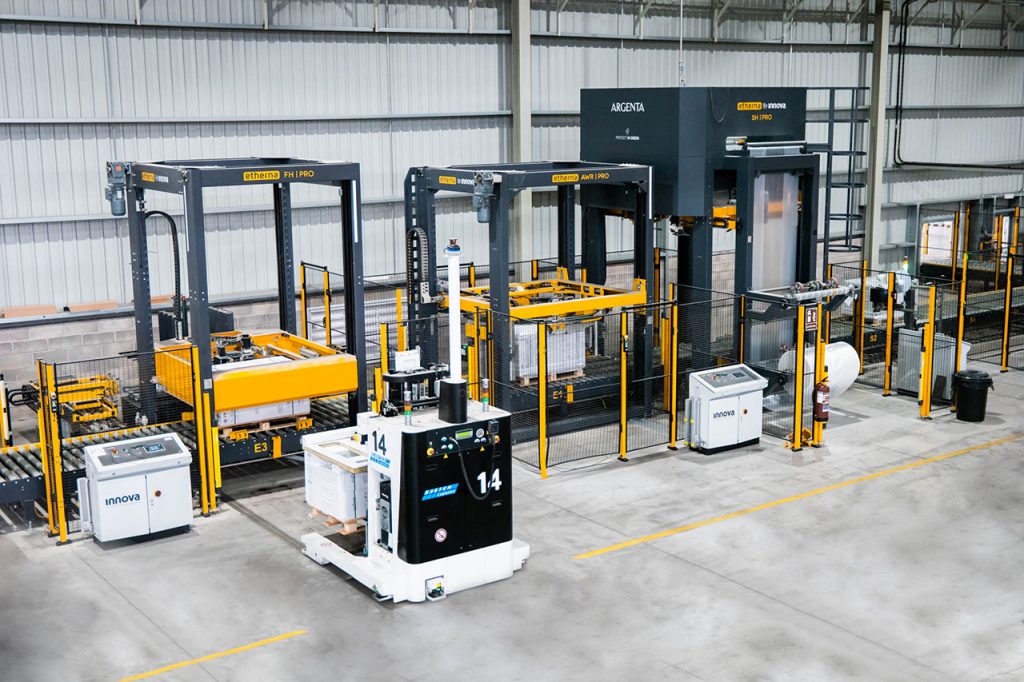
In conclusion, end-of-line KPIs are the key tool to measure and ensure the proper performance of your packaging line. As we have seen, it is not enough to monitor OEE alone—it is also necessary to dive deeper into specific indicators such as cost per pallet, load safety, or carbon footprint to identify and correct hidden inefficiencies that affect end-of-line performance.
At Innova Group, as specialists in automatic packaging lines, we can advise you on optimizing your packaging equipment, consumables, and reducing errors and downtime. Contact our technical-commercial team and discover how we can help you optimize and improve your packaging line.