Key aspects of industrial packaging: Primary, secondary and tertiary levels
In industrial environments, when we talk about packaging, we generally refer to all the elements used to cover and protect a product. However, for products to arrive in perfect condition from the production plant to the final consumer, they must pass through a protection system structured into three levels: primary, secondary, and tertiary packaging.
As specialists in end-of-line packaging systems, at Innova we explain the functions of packaging, the differences between each level, and why proper management of each one is essential for logistics chain efficiency.
What are the functions of packaging?
The concept of packaging refers to the elements that protect and group goods for transportation and storage. Throughout the supply chain, products are exposed to a series of potential risks that packaging must minimize. These include external agents such as dust, moisture, or extreme environmental conditions, as well as damage caused by improper handling.
Therefore, the main functions of packaging can be summarized as follows:
- Protect the load throughout all logistics stages.
- Facilitate the handling, storage, and transportation of products through proper load grouping.
- Provide product information for better traceability.
- Reinforce the company’s brand image.
Types of packaging: primary, secondary, and tertiary
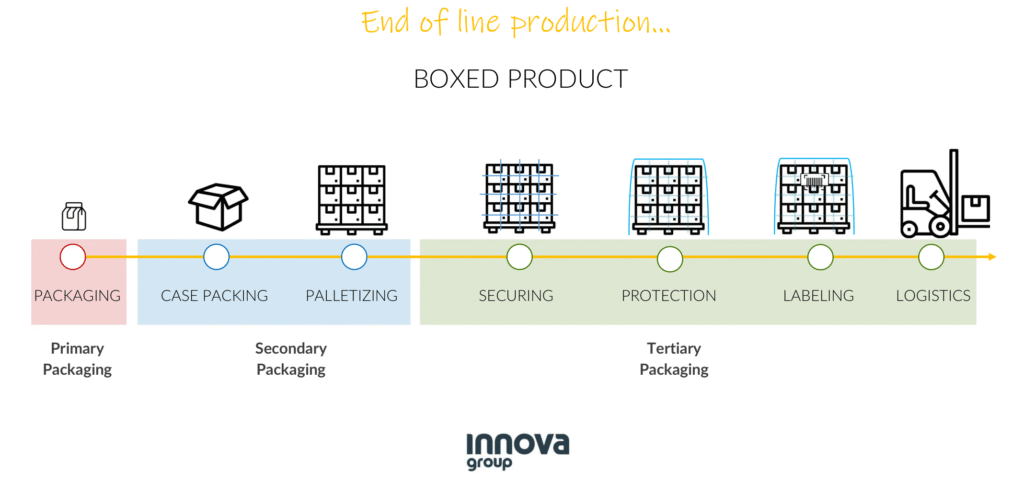
Packaging types are differentiated and classified according to the position they occupy within the different layers of product protection. European Union Directive 94/62/EC on packaging and packaging waste establishes and defines the three packaging categories, dividing them into primary, secondary, and tertiary packaging.
1. Primary packaging
Primary packaging is the packaging that comes into direct contact with the product and whose main function is to protect and preserve it in perfect condition. This first packaging level is also known as sales packaging, as it represents the smallest consumer unit intended exclusively for the final customer.
Examples of primary packaging include milk cartons, soda cans, pharmaceutical blister packs, or the bags used to store concrete.
Functions of primary packaging:
- Ensure proper preservation and isolation of the contents from external agents or possible contamination.
- Guarantee product stability at the point of sale, preventing falls or displacement during display.
- Correctly identify the product according to current regulations, including essential information such as instructions for use, composition, or expiration date.
- Reinforce brand image and attract consumer attention through an appealing and easily recognizable design.
2. Secondary packaging
Secondary packaging is responsible for grouping several primary packages into a single load unit. Generally, secondary packaging takes the form of cardboard boxes or other materials such as plastic film. This type of packaging is also used to display units at points of sale, which means it may also serve a communication and promotional role.
Examples of secondary packaging include shrink-wrapped bottle or can multipacks, as well as display boxes used in supermarkets and retail stores.
Functions of secondary packaging:
- Group and contain a specific number of units to facilitate distribution, storage, and sales.
- Include additional information and logistics data.
- Maintain the brand’s visual identity and design when intended for retail display.
3. Tertiary packaging
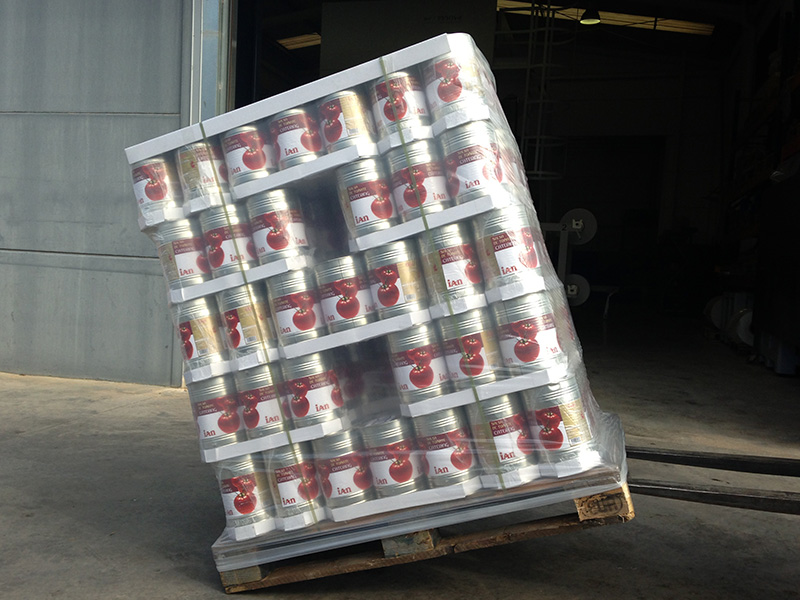
Finally, tertiary packaging is a key element in the logistics chain, as it is the level responsible for grouping, protecting, and facilitating the transportation of products in large quantities. Its main function is to ensure that the load reaches its destination in perfect condition while optimizing handling and logistics efficiency.
Examples of tertiary packaging include wooden or plastic pallets, stretch film used for wrapping, and plastic or steel strapping. Industrial containers and large-format boxes are also considered tertiary packaging.
This type of packaging is not intended for the final consumer. Instead, its main functions are:
- Product protection
- Ensuring load stability
- Reducing transportation incidents and damage
- Facilitating the storage of large product volumes
Innova’s solutions for tertiary packaging
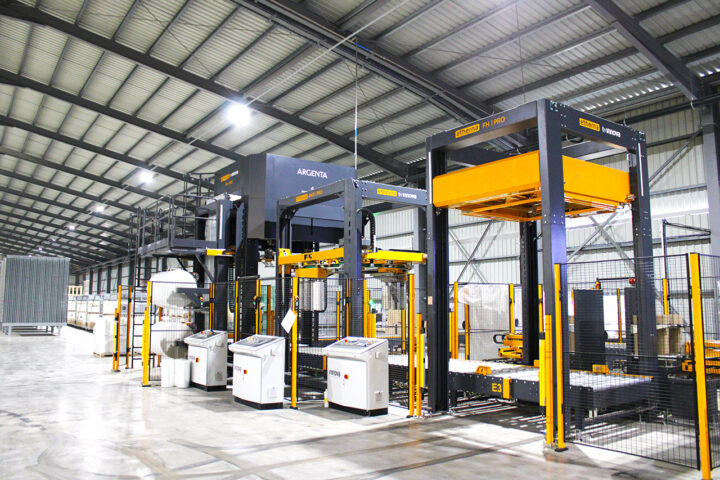
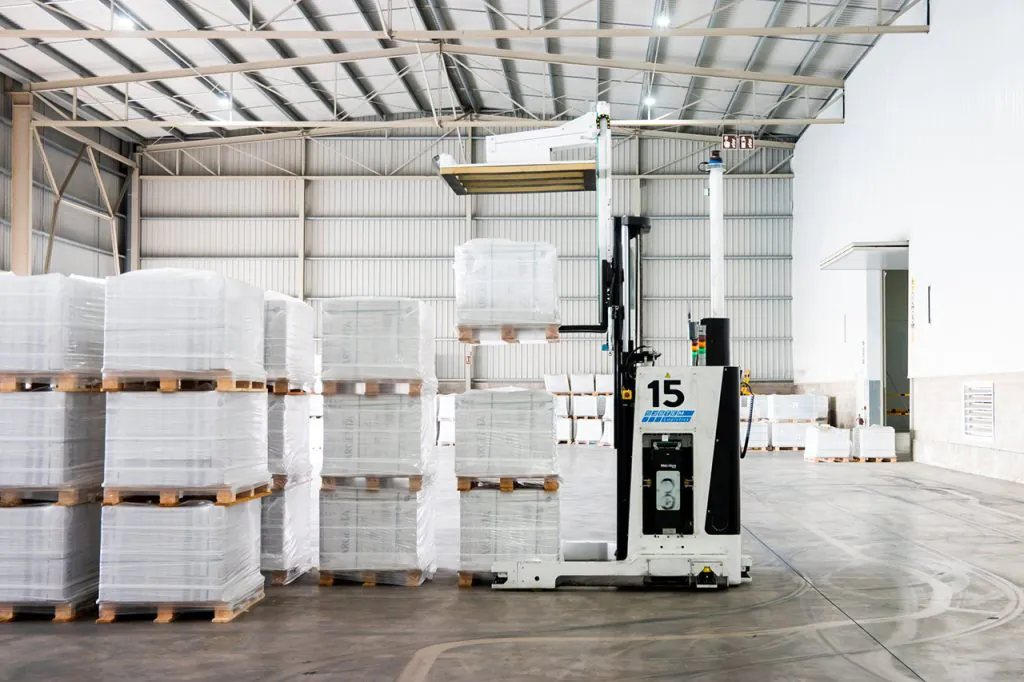
At Innova, as expert manufacturers of end-of-line packaging systems, we develop solutions tailored to the needs of each industry, capable of ensuring load stability, improving productivity, and reducing transportation incidents.
Some of the solutions offered by Innova include:
1. Automatic strapping systems
Automatic strapping systems are one of the most widely used solutions for securing palletized loads. By applying horizontal or vertical straps, they compact and secure the load into a single block, preventing movement and falls during transportation and storage.
In addition, Innova’s systems allow the number and position of straps to be adapted according to the dimensions and characteristics of the product, while also incorporating accessories such as corner board applicators to further improve load protection.
2. Automatic stretch wrapping systems
Automatic stretch wrapping systems apply stretch film around the load to secure and protect it during logistics operations. This is a highly versatile solution capable of adapting to different pallet sizes and types.
Innova’s systems provide uniform protection for the entire load, improve stability, and reduce the risk of damage during handling. Like the strapping systems, they can also include accessories such as a top sheet applicator or reinforcement rope system to further increase product protection.
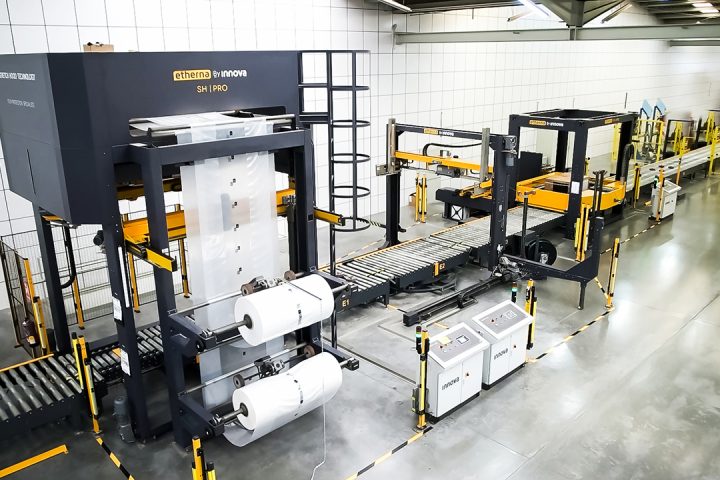
3. Stretch Hood system
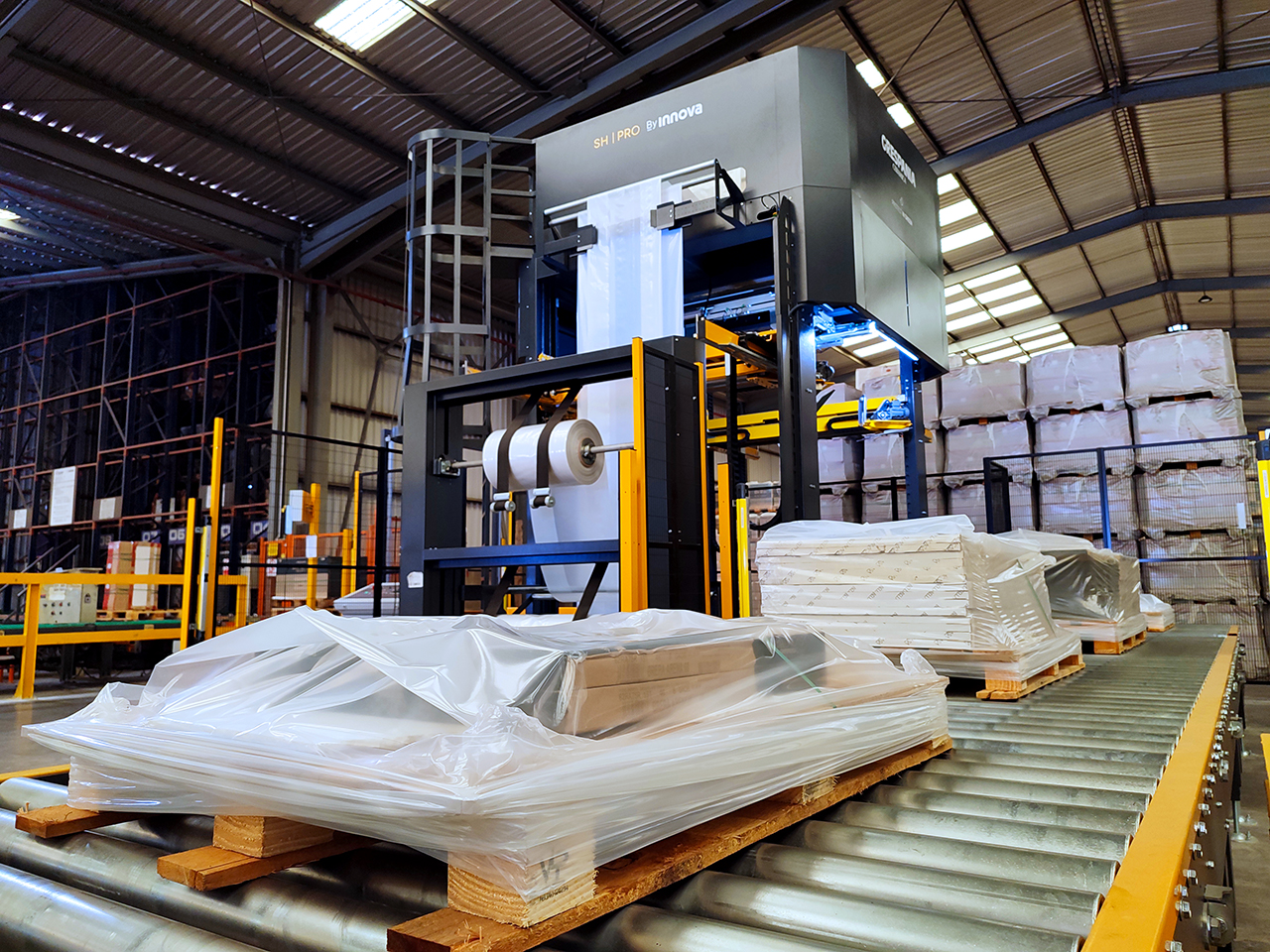
Finally, the Stretch Hood system is the most advanced packaging solution, especially for products requiring a high level of protection and airtight sealing. Stretch Hood technology fully covers the load with tubular film, sealing it on all five sides and completely protecting it from external agents. In addition, it stands out for its speed, efficiency, sustainability, and superior finish quality.
In conclusion, packaging plays a fundamental role in the protection, handling, and transportation of products. Each packaging level fulfills specific and essential functions within the logistics chain.
In this context, tertiary packaging takes on particular importance in terms of load protection and stability, as well as reducing possible incidents during storage and transportation. At Innova, as specialists in end-of-line packaging systems, we develop automated solutions capable of adapting to the needs of every industry. Contact our technical-commercial team and discover how we can help you optimize and improve your packaging line.