PPWR regulation: Everything you need to know and how it affects packaging consumables
The European PPWR regulation (Packaging and Packaging Waste Regulation) establishes the new regulatory framework for the packaging sector in the European Union. Its objective is to reduce packaging waste, promote the circular economy, and establish common rules for all member states.
Recently, the European Commission modified the requirements of this regulation, a relevant decision for the logistics and packaging sector since stretch film and strapping materials are exempt from the initially planned 100% reuse requirement. This decision aims to balance sustainability goals with the technical and economic viability of logistics operations.
What did the PPWR initially establish?
The purpose of this regulation is to transform the current packaging production and consumption model to make it more sustainable. Its main objectives include reducing packaging waste, increasing the use of recycled materials, and promoting the reuse of certain packaging formats.
In this context, Article 29 of the regulation required that, starting January 1, 2030, 100% of the elements used to stabilize goods on pallets, such as plastic film and strapping, had to be reusable when used in certain logistics situations, including:
- Internal transport within the same company.
- Transport between affiliated or associated companies.
- Transport between companies within the same member state.
This requirement raised concerns in the industry due to the technical and economic difficulties involved in its implementation.
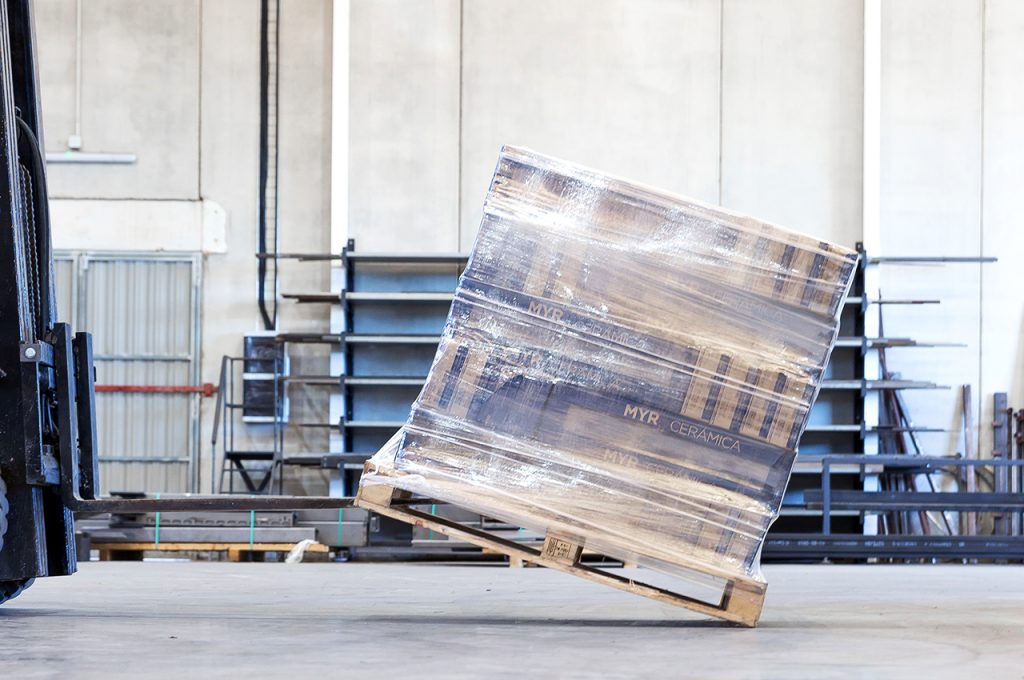
European Commission revision: Film and strapping are exempt
After conducting studies on the real feasibility of this regulation, the European Commission concluded that requiring 100% reuse for films and strapping is currently unfeasible, as imposing this obligation would generate disproportionate costs for the packaging and logistics sector.
Achieving the use of 100% reusable packaging in these sectors would require between €4.7 and €5.3 billion in additional investment, beyond normal replacement cycles. In addition, European Plastic Films (EuPF) point out that an independent life-cycle assessment has shown that switching to fully reusable alternatives could increase greenhouse gas emissions between 35% and more than 1,700%, compared to existing recyclable single-use solutions.
Furthermore, the Commission recognizes that single-use materials such as stretch film or tension strapping currently offer levels of load security and stability that reusable alternatives cannot yet match.

What does not change: the 40% reuse target
Despite the introduction of this specific exemption, the overall objectives of the PPWR remain unchanged.
Starting January 1, 2030, 40% of transport packaging must be reusable. This applies to formats such as pallets, foldable plastic crates, intermediate bulk containers (IBCs), buckets, drums, and other industrial packaging, including pallet packaging and strapping.
In addition, packaging material manufacturers must continue complying with other key requirements of the regulation, such as:
- Ensuring the recyclability of packaging.
- Incorporating recycled content in certain materials.
- Reducing the environmental impact of packaging throughout its life cycle.
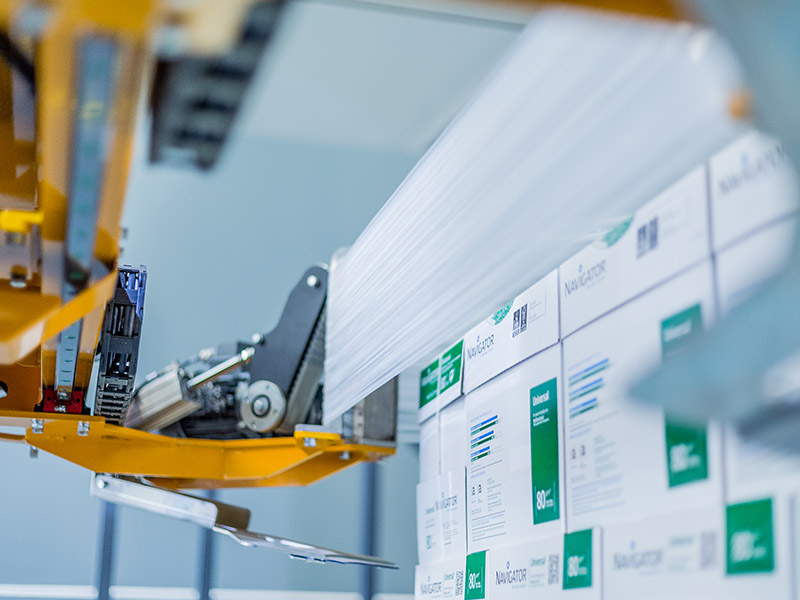
A gradual adaptation of the packaging sector
The exemption for film and strapping demonstrates the European Commission’s intention to adapt sustainability goals to the technological and economic reality of the logistics sector.
Although some specific packaging components are excluded from reuse requirements, the packaging sector will still need to continue advancing toward more sustainable solutions.
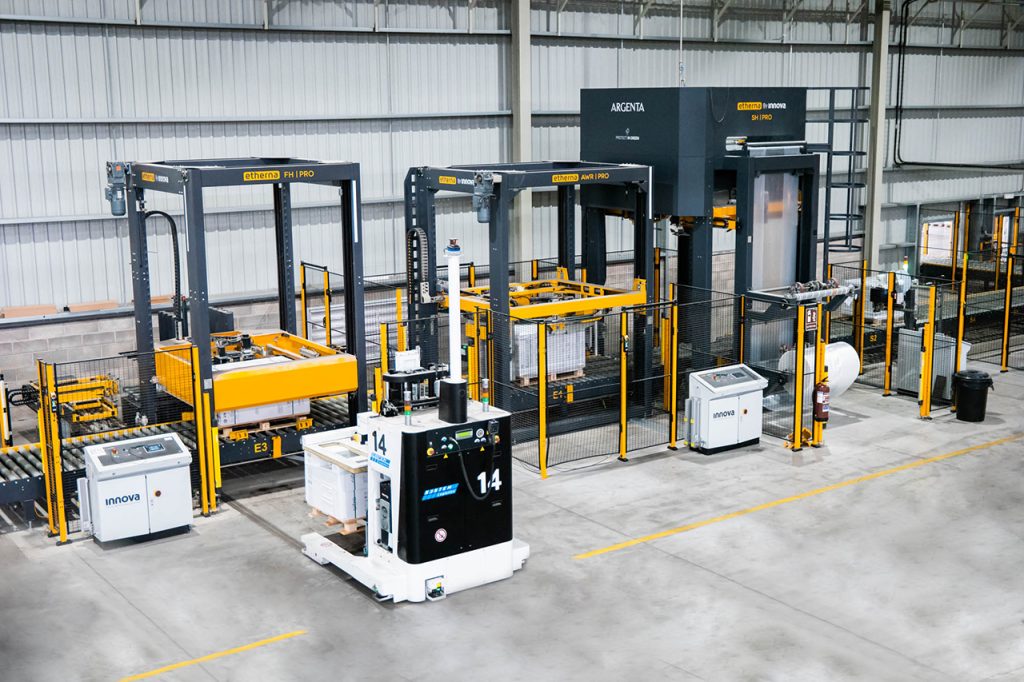
How can Innova’s systems help meet PPWR requirements?
Innova’s packaging systems not only provide operational efficiency but are also designed to minimize the consumption of materials and energy.
1. Reduced use of consumables
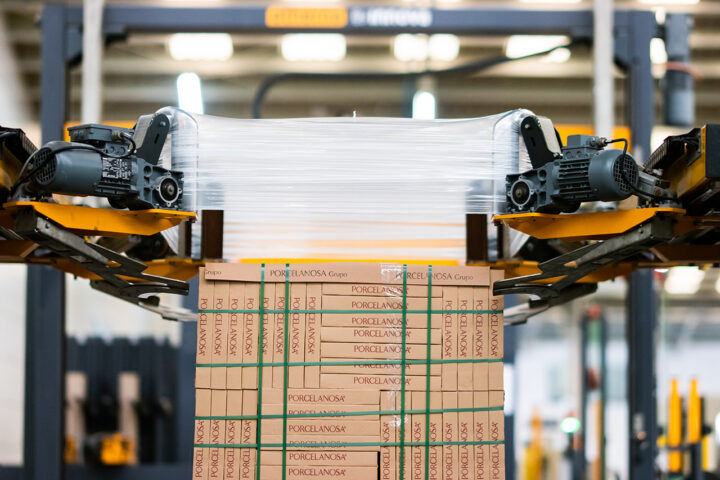
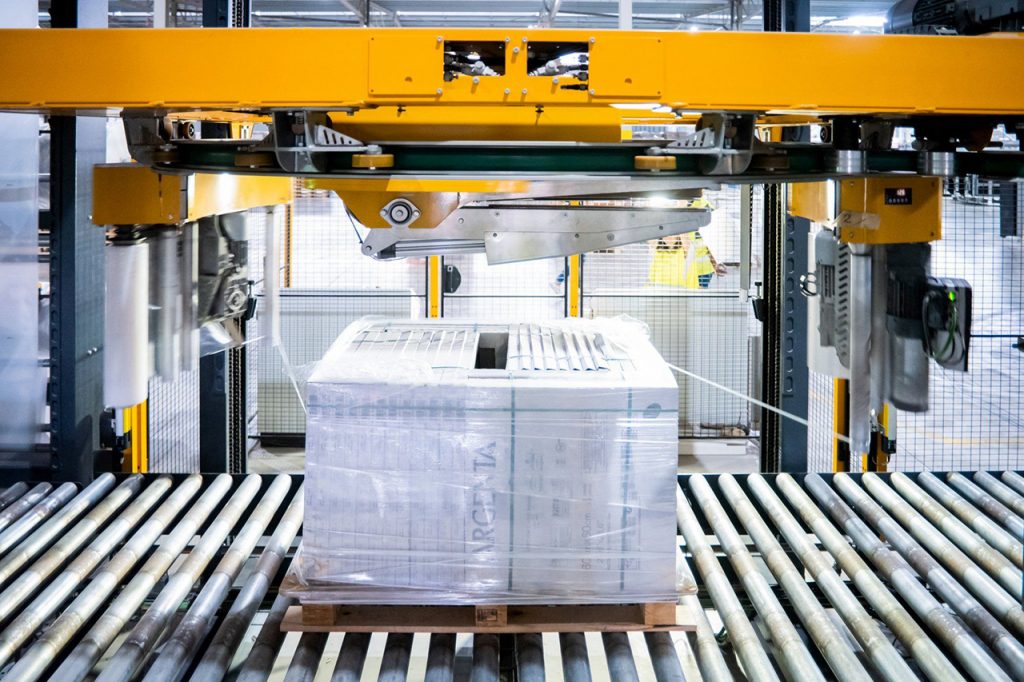
Solutions such as Stretch Hood, which uses a single hood to cover and protect all sides of the pallet, or wrapping systems with pre-stretch technology of up to 350%, make it possible to significantly reduce the material used per pallet without compromising load containment, stability, or protection.
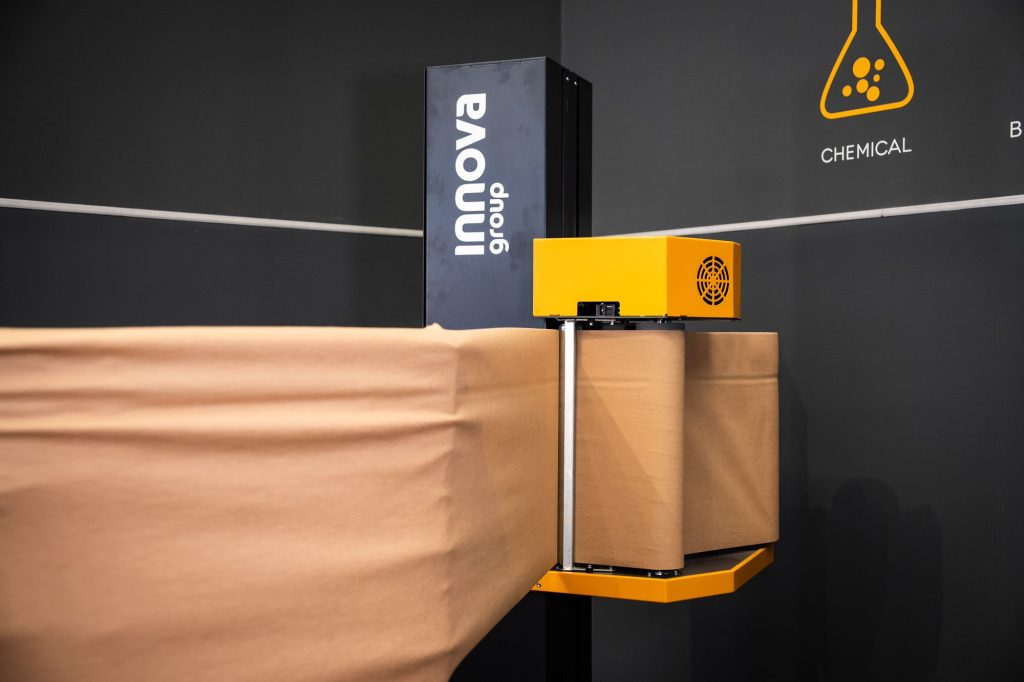
Strapping systems can also help achieve these sustainability goals, as a small number of straps and minimal consumable material can ensure full load stability. Finally, Innova’s Cyclone semi-automatic wrapper is prepared to work with recyclable paper consumables, offering a more environmentally friendly alternative to plastic.
2. Energy efficiency
In addition to manufacturing systems that reduce consumable usage, Innova’s solutions also integrate high-efficiency motors and components that consume less energy during each cycle. These motors allow machines to operate with lower energy demand without compromising performance.
3. Equipment durability
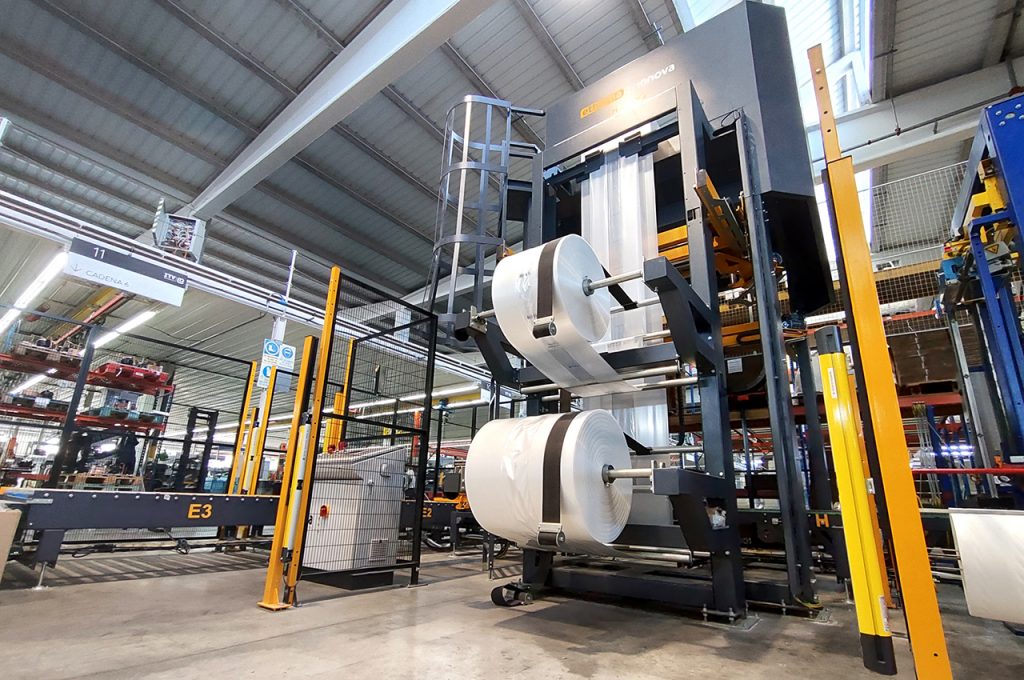
The modular design of our machines facilitates both maintenance and the incorporation of technological upgrades, significantly extending the service life of the equipment.
Thanks to this modular structure, different system components can be replaced independently without the need to replace the entire machine, reducing the environmental impact associated with manufacturing and disposing of new equipment.
Both this point and the previous one are aligned with some of the main objectives of the PPWR, which aims to reduce the environmental impact of packaging systems throughout their entire life cycle.
In conclusion, reducing material consumption, improving recyclability, and optimizing packaging processes will be key factors in meeting the environmental objectives established by the European Union in the coming years.
At Innova Group, we develop packaging solutions that optimize material use and reduce environmental impact. Contact us with no obligation for more information about our packaging solutions, our technical team will be happy to assist you.