PPWR and EPR: Packaging Regulatory Changes for Companies Selling Across Multiple Markets
The entry into application of the European Packaging and Packaging Waste Regulation (PPWR) marks a major step toward harmonizing packaging rules across the European Union.
As of August 12, 2026, the regulation establishes a common framework for all EU member states, to reduce packaging waste, promoting the circular economy, and improving the sustainability of products and packaging systems. However, the fact that the PPWR is a European regulation directly applicable in all member states does not mean that companies can manage all their packaging-related obligations through a single European system.
Extended Producer Responsibility (EPR) continues to have a significant national dimension. This means that a company can market exactly the same product and use exactly the same packaging in different European countries and still be required to comply with different registration, reporting, and EPR compliance procedures in each market.
For companies operating internationally, understanding this distinction will become increasingly important.
Two Levels of Compliance That Should Not Be Confused
To understand the new regulatory landscape, it is essential to distinguish between the technical requirements for packaging and its legal and administrative management. The PPWR focuses on the technical aspects, requiring packaging placed on the European market to be recyclable, incorporate recycled materials, and minimize unnecessary empty space in packaged loads.
EPR, on the other hand, governs the administrative and financial aspects. Each member state requires companies to register on its official platform, join a collective waste management scheme, and periodically report the kilograms of packaging placed on its market. For this reason, keeping your producer registration up to date in your home country does not authorize you to market packaging in other EU countries without completing the local requirements of the destination country.
Administrative Differences Across the European Market
Even when your product and its packaging are exactly the same, administrative requirements change as you cross each border:
- Each country has its own registration portal: such as RPP in Spain, LUCID in Germany, or CITEO in France.
- Each market classifies materials differently: distinguishing between household and industrial packaging in different ways, or applying different fees depending on how easily a material can be recycled.
- Deadlines vary: packaging declarations may be required monthly, quarterly, or annually, depending on the country.
The Solution: Centralize Packaging Data at the Manufacturing Facility
Although registration procedures vary from one European country to another, one thing remains constant: the packaging data for each company’s products. Therefore, the most efficient way to manage EPR obligations across multiple markets without duplicating work is to maintain a single, centralized source of packaging information at the manufacturing facility.
To ensure accurate reporting in any country, a company must have precise information on three key factors: which materials it uses, the weight of each component, and the number of units it sells in each market.
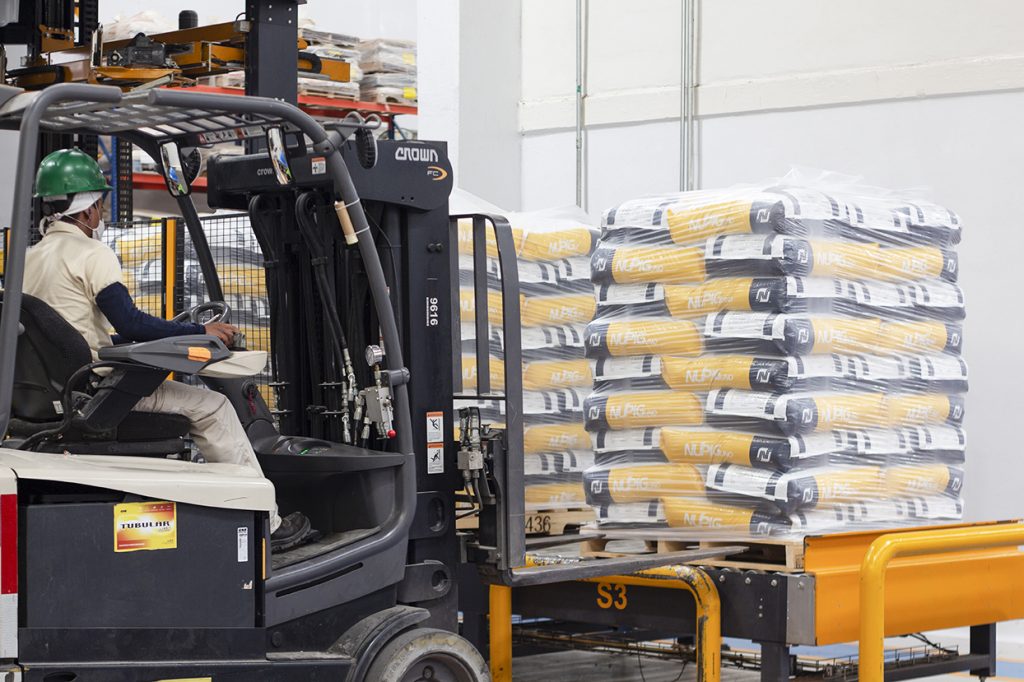
A single technical file should be maintained for each product, covering all its packaging components:
- Primary and secondary packaging: glass, plastic (specifying the percentage of post-consumer recycled plastic, or PCR), paper, cardboard, or metal.
- Transport and end-of-line packaging: stretch film, Stretch Hood covers, strapping, corner protectors, shipping boxes, and pallets.
Centralizing this data makes it easier to adapt to the formats required by any European registration system, reduces reporting errors, and, most importantly, helps identify opportunities to reduce material consumption and lower end-of-line packaging costs.
A Roadmap for Entering New Markets
Before starting to sell in another EU country, companies should review their EPR obligations as part of their market-entry plan. The process is straightforward:
- Confirm who is legally responsible: Determine who is responsible for EPR compliance in that market—your company or your customer.
- Register in the destination country: Complete the registration process through the destination country’s official platform.
- Appoint an authorized representative: If you sell directly to end customers from Spain, appoint a representative in the destination country when required by local regulations.
- Join the local recycling scheme: Enroll in an authorized collective waste management scheme in that country.
- Adapt your packaging data: Adjust the weights and materials in your product catalog to match the reporting format required by that market, ensuring declarations are submitted on time.
It is important to note that, in practice, who must pay EPR fees and submit declarations depends on how the company sells its products. If a local distributor is used in the destination country, the distributor is generally responsible. However, if the company sells directly to the end customer, the manufacturer may be directly responsible for registration and compliance, depending on the applicable national rules.
What Role Does End-of-Line Packaging Play in This New Landscape?
The evolution of the PPWR and EPR systems highlights the importance of controlling material consumption in packaging operations.
The better a company understands the materials it uses and the consumption associated with each unit load, the greater its ability to optimize its processes. This is where end-of-line packaging makes a difference, helping protect products while using packaging materials more efficiently.
In this regard, Innova’s packaging systems not only deliver operational efficiency but are also designed to minimize material and energy consumption.
1. Lower Consumable Usage and Reduced EPR Costs
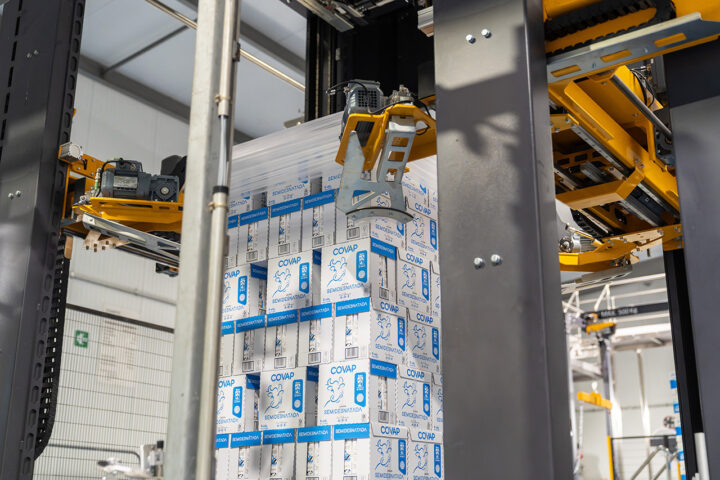
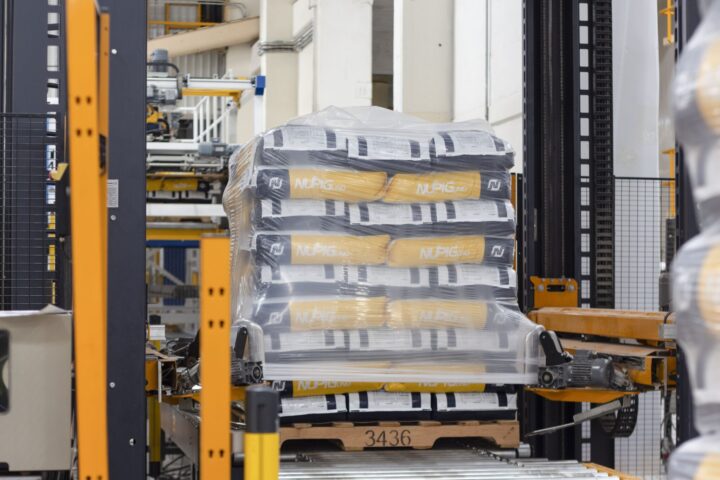
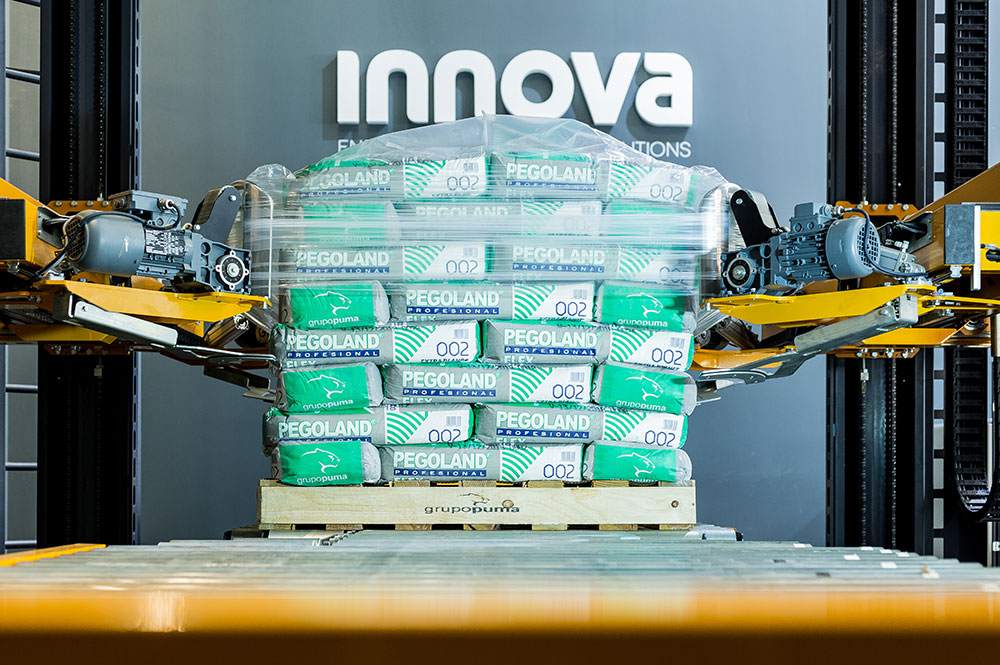
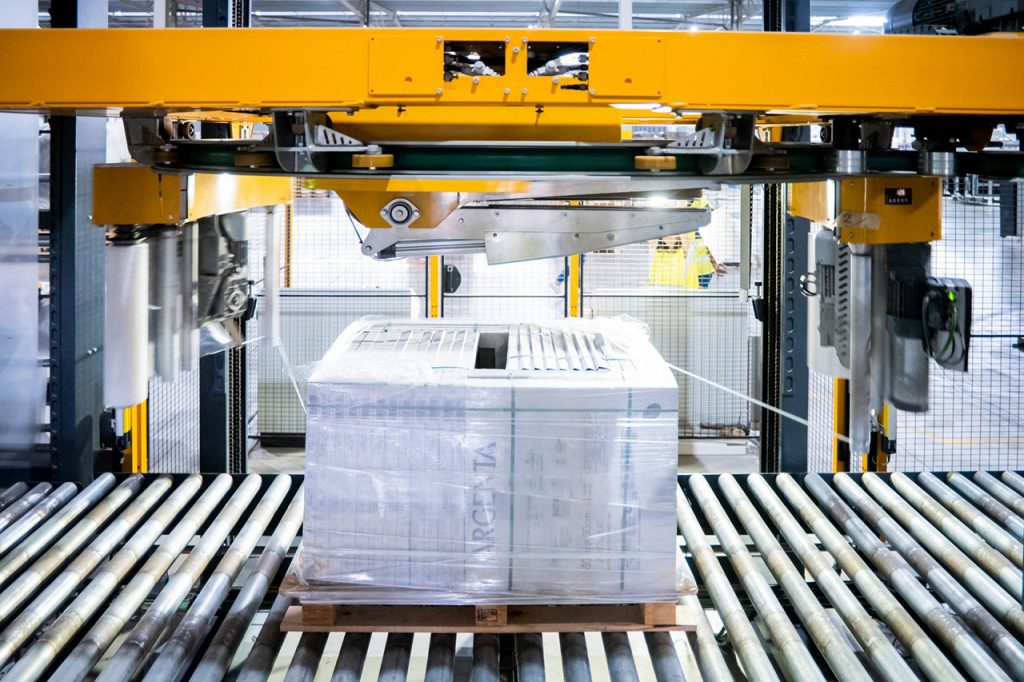
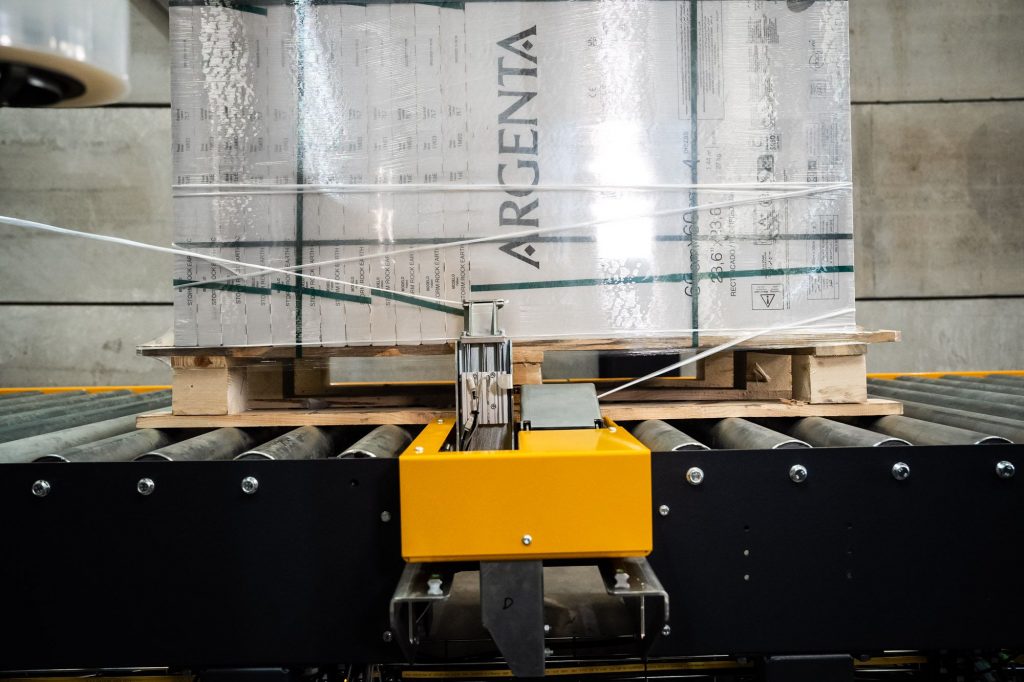
Solutions such as Stretch Hood, which uses a single cover to cover and protect all sides of a pallet, and stretch wrappers featuring pre-stretch technology of up to 350% can significantly reduce the amount of material used per pallet. This directly reduces the kilograms of packaging reported for EPR fees in each country without compromising load containment, stability, or protection.
2. Energy Efficiency
Innova’s solutions also incorporate high-efficiency motors and components that consume less energy during each cycle. These motors allow machines to operate with lower energy demand without compromising performance.
3. Equipment Durability
The modular design of our machines simplifies maintenance and the integration of technological upgrades, significantly extending equipment service life.
Both the second and third points align with some of the PPWR’s key objectives, which aim to reduce the environmental impact of packaging systems throughout their entire life cycle.
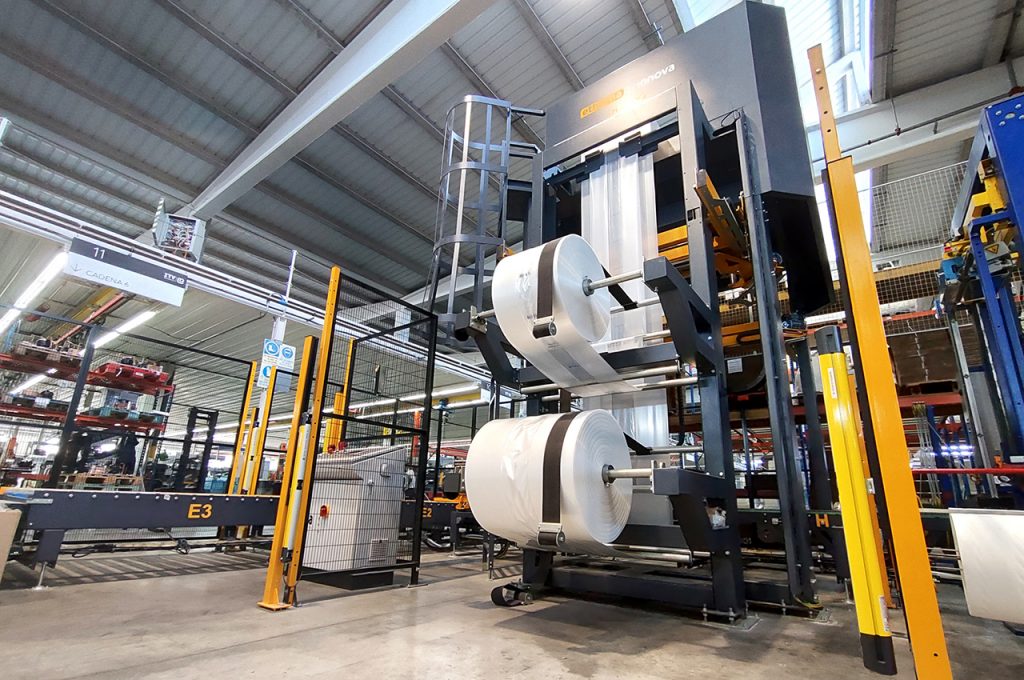
Ultimately, adapting to the new PPWR framework and local EPR requirements involves not only accurately managing packaging data in each European market but also carefully monitoring material consumption at the manufacturing facility. Minimizing consumable usage and optimizing end-of-line processes will be key to reducing recycling-related fees and meeting the European Union’s environmental objectives.
At Innova Group, we develop end-of-line packaging solutions designed to reduce film and energy consumption without compromising load stability. Contact us to learn more about optimizing your production line. Our technical team will be happy to advise you.